

Key Takeaways
- A fever of 103 F (39.4 C) or higher is dangerous in older adults, and above 99 F can be cause for concern.
- Seek immediate care if a fever is accompanied by symptoms like confusion, severe headache, rash, chest pain, or seizures.
- Fevers in older adults can result from viral infections, bacterial infections, or heat exhaustion.
- Early detection and treatment of fever-related symptoms can prevent serious complications.
- Senior living communities can offer 24/7 compassionate care for residents experiencing health concerns, including fevers.
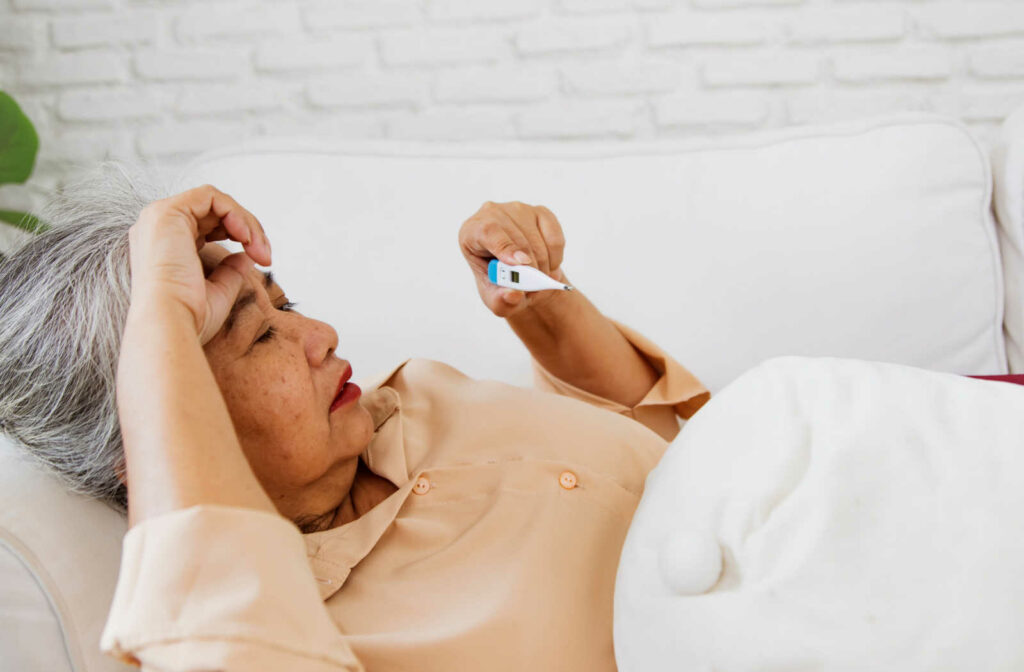
If your loved one has a fever, you want them to receive the best care possible. Fevers can be tricky, and you may wonder when you should be concerned. Knowing when to take them for professional care can help protect their health.
In seniors, you should be concerned about a fever when their body temperature is too high or they experience additional symptoms. Fevers can fluctuate in severity, so it’s important to know when a fever is concerning.
How Fevers Are Different in Older Adults
Older adults often have a lower baseline body temperature than younger adults. While 98.6°F (37°C) is considered the standard “normal,” many seniors run closer to 97°F (36.1°C) or even lower. This means that a temperature reading of 99°F or 100°F for example, may look mild, but can actually represent a significant fever for an older adult, even if it wouldn’t raise alarms in a younger person.
Perhaps more importantly, older adults may not spike a high fever at all, even when dealing with a serious infection. The immune system becomes less responsive with age, which means the body may not mount the dramatic fever response you’d expect. This is why monitoring for any temperature change, not just high fevers, is so important in older adults. A temperature increase of even 2°F above a person’s normal baseline is worth paying attention to.
When to Be Concerned About Your Loved One’s Fever?
A fever of 103°F (39.4°C) or higher is dangerous in older adults and warrants prompt medical attention — yes, including in otherwise healthy seniors. At this temperature, the risk of serious complications increases significantly, and the underlying cause needs to be identified and treated quickly.
However, because older adults often run lower baseline temperatures and may not spike high fevers even when seriously ill, a temperature of 100.4°F (38°C) or above should also be treated as a fever requiring attention in an elderly person. Don’t wait for the thermometer to hit 103°F before acting.
As a general guide:
- 99–100.3°F – Monitor closely; may be significant depending on the person’s normal baseline
- 100.4°F and above – Considered a fever in elderly adults; contact a healthcare provider
- 103°F and above – Seek medical care promptly
- 104°F and above – Seek emergency care immediately
Other Worrying Symptoms
Depending on the cause of the illness, your loved one may experience other symptoms. You should seek immediate medical attention if you notice any of these signs in an older adult:
- Severe headache
- Rash
- Severe light sensitivity
- Stiff neck or pain when bending their head forward
- Confusion, strange behavior, or slurred speech
- Persistent vomiting
- Difficulty breathing or chest pain
- Abdominal pain
- Pain when urinating
- Convulsions or seizures
Immediate medical attention is crucial for anyone experiencing these symptoms. Early treatment can help protect their health.
What Can Cause a Fever?
Your body typically regulates heat by generating and losing it at the same time. A specific part of the brain helps balance heat production and loss when you’re healthy. When you’re sick, this heat production and loss aren’t equal, causing a fever.
Your brain sets your body temperature high when you’re sick. In the process, you become hotter, but your body has trouble losing heat.
You can have a fever for several reasons, including infections or heat exhaustion.
Viral Infection
Viral infections happen because of viruses. A virus enters your body and multiplies, eventually making someone sick.
If your loved one develops a viral infection, their immune system must fight it off. Treatments can help manage symptoms in the meantime. For some viruses, vaccinations can help prevent someone from getting them.
Types of viral infections include:
- Common cold
- Flu
- HIV
- Ebola
- COVID-19
Bacterial Infection
Bacterial infections occur when harmful bacteria enter the body, causing an illness or medical condition. Bacteria can interact with someone’s skin, gut, lungs, heart, brain, or other areas of the body.
Some common types of bacterial infection include:
- Food poisoning
- Skin, ear, or sinus infections
- Bacterial pneumonia
- Urinary tract infections
Many types of infections aren’t serious and are treatable with antibiotics. However, untreated bacterial infections can go further into the body and affect other aspects of your loved one’s health. Always watch for symptoms of these infections.
The most common symptom of a bacterial infection is a fever, but chills, fatigue, and headaches can be other signs.

Heat Exhaustion
Heat exhaustion can be common during the summer months and dangerous for seniors. This condition happens when body temperature rises but doesn’t cool down. A senior may have heat exhaustion if they experience:
- Dizziness
- Fever
- Fatigue
- Nausea & vomiting
- Fast, shallow breathing
- Severe sweating
Drinking water, cooling down in any nearby shade or inside, or resting can typically help if someone experiences heat exhaustion. If symptoms continue, your loved one may need medical attention.
Older adults should take several precautions during summer to prevent heat exhaustion, including:
- Drinking enough water
- Keeping fans nearby
- Using an air conditioner
- Dressing for the weather
- Wearing sunscreen
- Asking their doctor if any medications can increase the risk of overheating
Give Your Loved One Consistent, Compassionate Care
If you want your loved ones to receive the care they need whenever they need it, you may want to consider senior living. These communities have 24/7 available staff to care for your loved one’s needs—whether it’s a fever or help getting dressed. The care your loved one requires depends on their unique needs.
This decision can be tough, but you can always visit our community to see what everyday life is like for residents. We can answer any questions you may have!Contact The Lodge at Historic Lewes if you’re interested in senior living for your loved one.